


Description
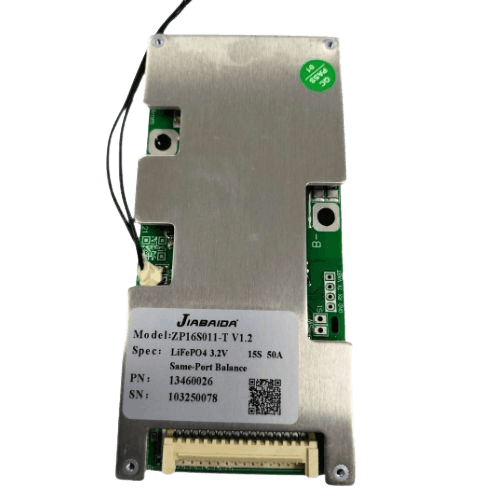
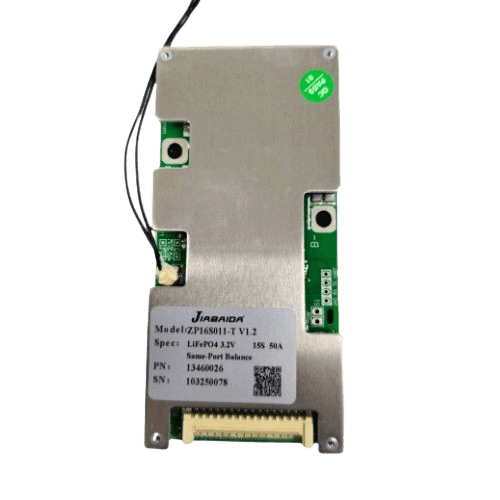
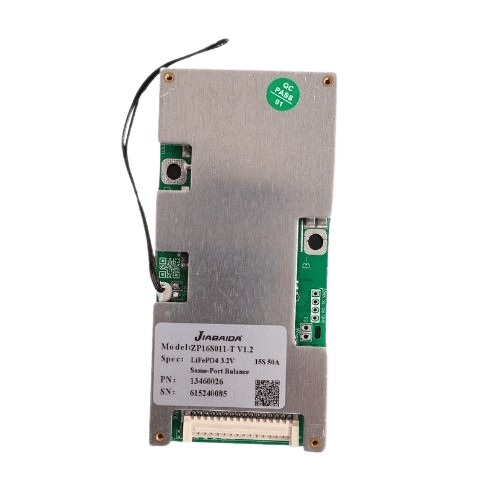
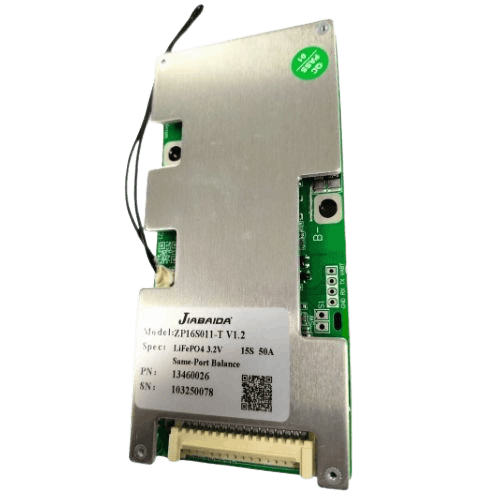
BMS LFP 15S 50A JBD (ZP16S011) (89st)
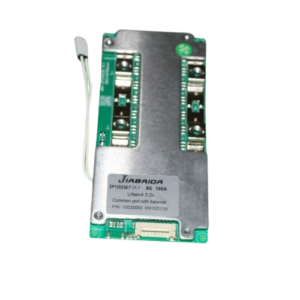
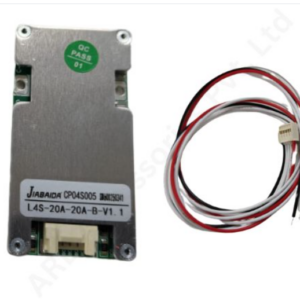
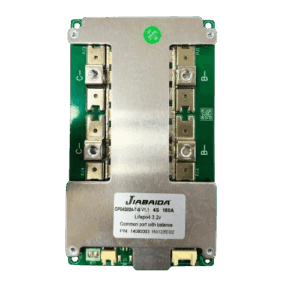
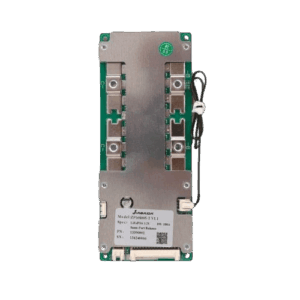
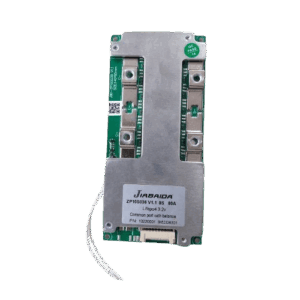
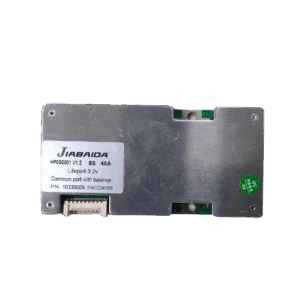
BMS LFP 15S 50A JBD (ZP16S011) (89st) is a high-performance Battery Management System designed for 15-series LiFePO4 battery packs (~48V). It supports 50A continuous charge and discharge current and includes advanced safety protections such as over-charge, over-discharge, over-current, short-circuit, and temperature protection. The board features passive cell balancing to maintain equal voltage across cells, improving battery life and performance. It is ideal for electric vehicles, solar energy storage systems, and DIY lithium battery packs.
The BMS LFP 15S 50A JBD (ZP16S011) (89st) is a reliable Battery Management System (BMS) developed for 15-cell LiFePO4 battery packs. With a nominal battery pack voltage of approximately 48V (3.2V × 15 cells), this BMS ensures safe charging, controlled discharging, and balanced operation of lithium iron phosphate battery packs.
This BMS is capable of handling up to 50A continuous current, making it suitable for medium- to high-power battery systems such as electric bikes, e-rickshaws, solar storage batteries, backup power systems, and DIY lithium battery packs. The system constantly monitors each cell’s voltage and temperature to maintain safe operation and prevent damage to the battery pack.
The ZP16S011 hardware platform uses passive cell balancing (typically around 30–60 mA), which helps equalize voltage differences between cells during charging and improves battery efficiency and lifespan.
For safety, the BMS integrates multiple protection functions including over-charge protection, over-discharge protection, over-current protection, short-circuit protection, and temperature monitoring using NTC sensors. These protection mechanisms ensure stable performance and reduce the risk of battery failure or overheating.
Many versions of this BMS also support optional communication interfaces such as UART, RS485, or Bluetooth modules, allowing users to monitor battery parameters like cell voltage, temperature, state of charge (SOC), and fault status through compatible software or mobile applications.
The board typically uses a common-port design, meaning charging and discharging share the same terminal, simplifying battery pack wiring and installation.
There are no reviews yet.